

Inflation Is Driving Trump's Approval Lower Than Jan 6
The president enters the midterm year with less than 40% approval

.jpg)
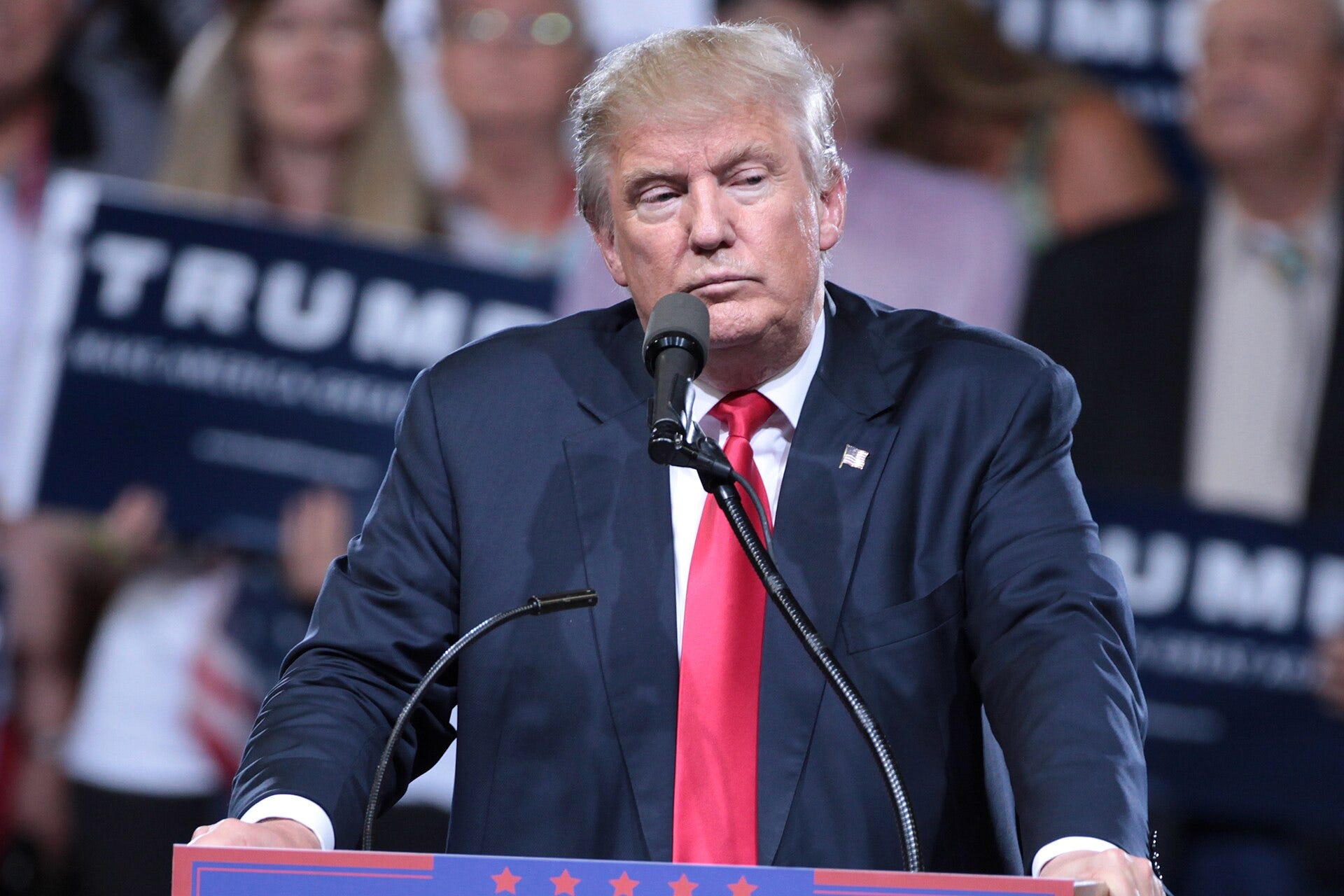
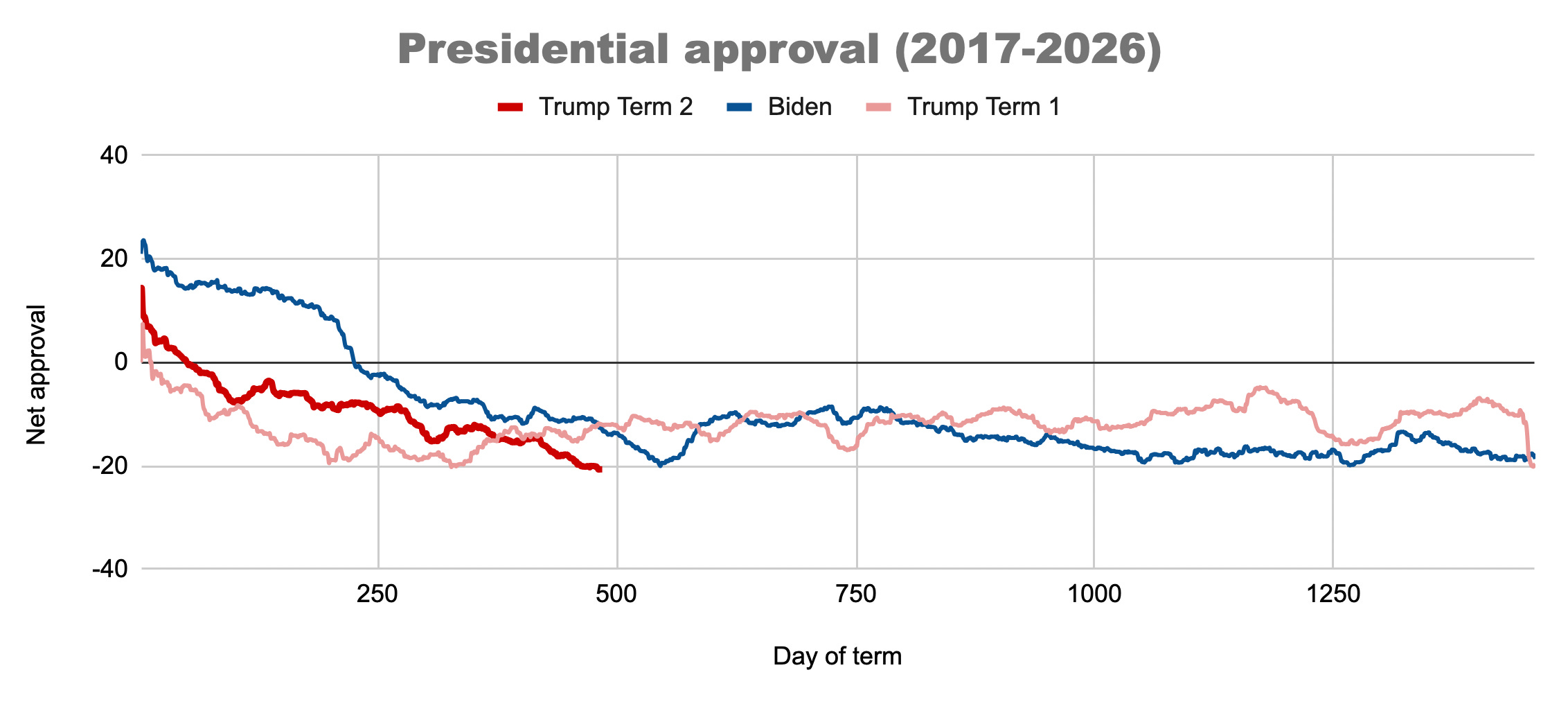
Donald Trump has never been so unpopular. Just 38.4% of Americans approve of his job performance in our average of recent polls, compared to 59.1% who disapprove. His net approval is -20.7%, down from -12.9% at the start of the year, -20.1% after the events of January 6, and lower than his all-time low in 2017, or Joe Biden’s worst numbers after the 2024 presidential debate.1
These numbers mark a dramatic shift from when Trump first returned to the White House last year. He maintained positive net approval through mid-March 2025, and held steady at -4 to -9% in the summer and fall—much better than the -14 to -20% ratings recorded at the same point of his first term.
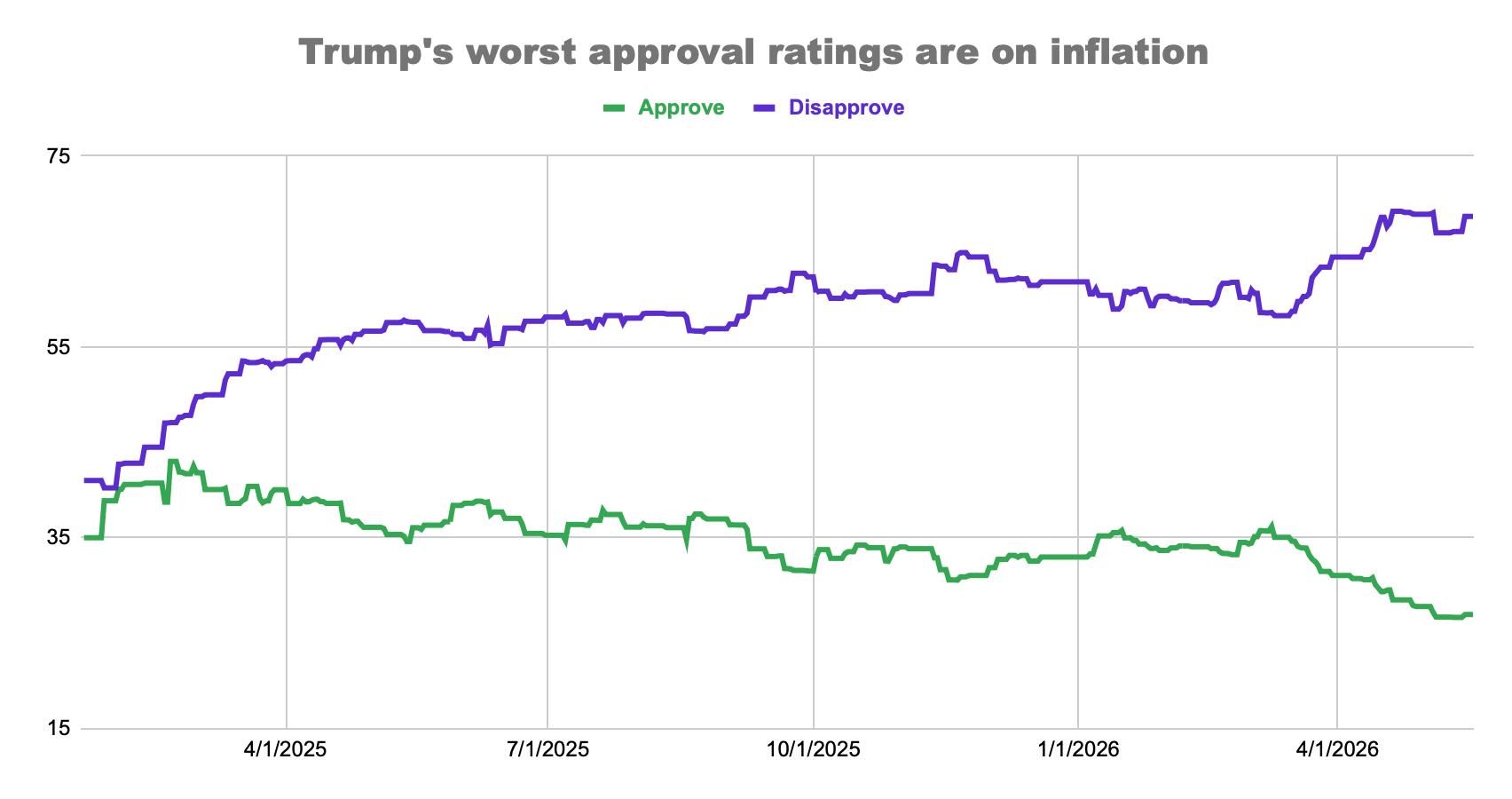
Unlike during his first term, however, Trump is not experiencing a year two rebound, driven in 2018 by his strong economic approval. Looking at the issues, it’s not hard to see why. His economic ratings currently sit about 28% underwater, a far cry from the positive net approval recorded in nearly every poll of his first term. Regarding inflation, less than 27% of Americans approve, compared to 69% who disapprove. These are disastrous numbers considering that inflation and the economy are polling as Americans’ top two issues.
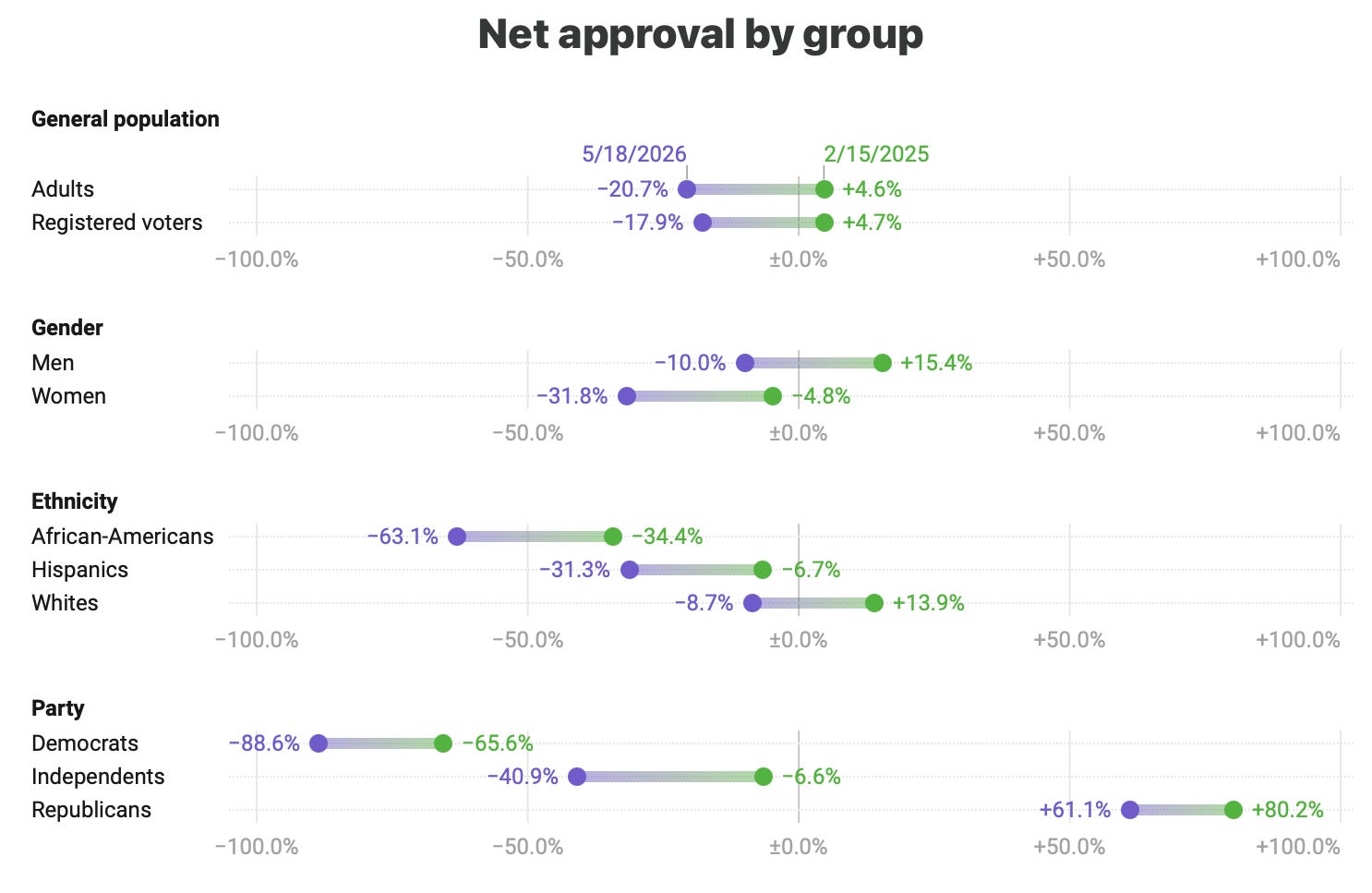
Furthermore, just like his gains with voters leading up to the 2024 election, Trump’s popularity collapse is broad. His net approval is down significantly with every group in our average, but it’s especially poor among independents, who currently sit at -40.9%. The only bright spot comes from Trump’s own party—Republicans approve of him by over 60%—though even that figure represents a double-digit drop from early 2025.
Three main events appear to have contributed most to these numbers: the Liberation Day tariffs, the government shutdown, and the Iran War. While all three events look similar in magnitude—each causing 5-6% drops in net approval—the Iran War stands out for two reasons. For one, the president was already at a low point before the war, with limited soft approval left to lose. He’s also still bleeding support more than two months in, compared to the month-long shutdown and tariff downturns.
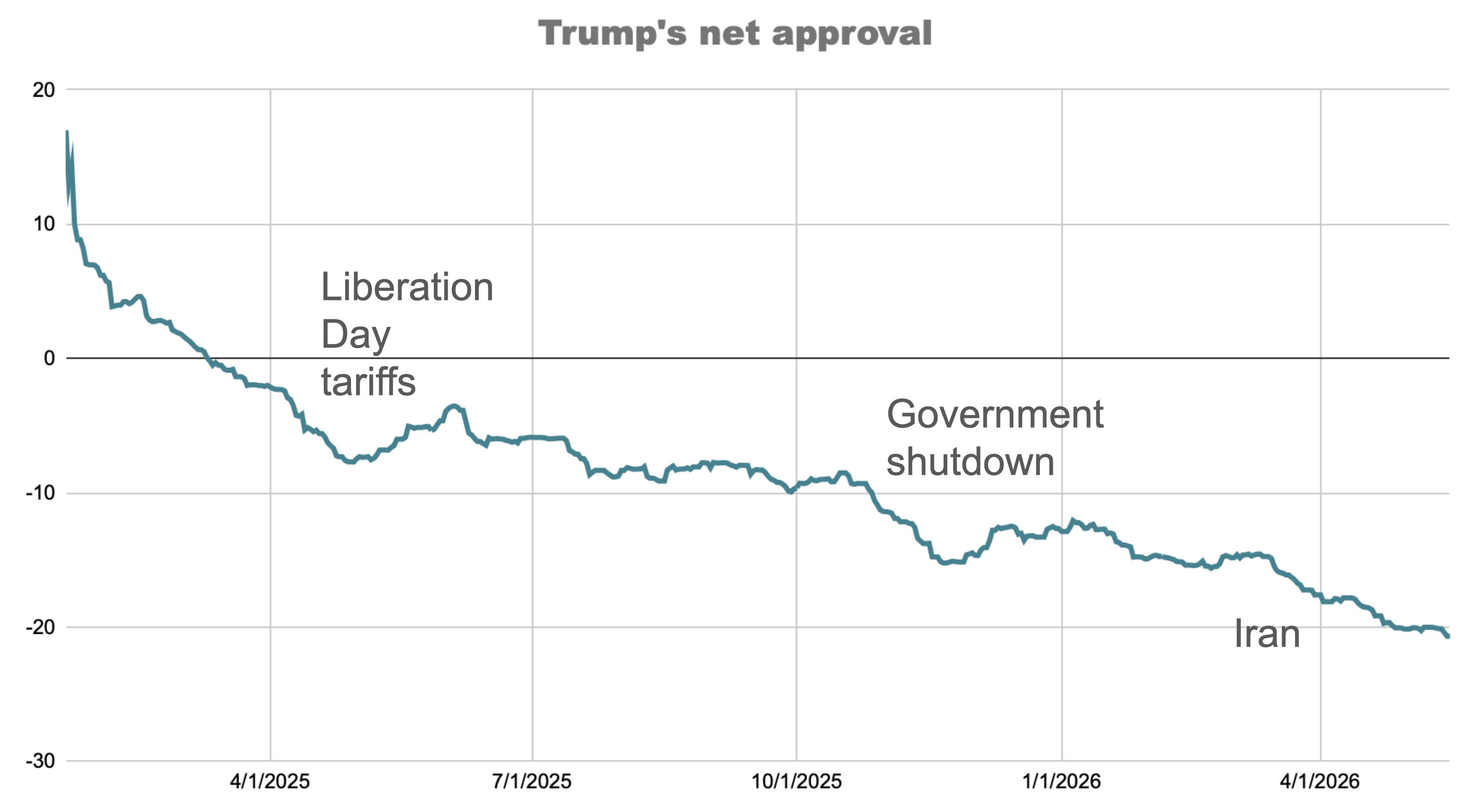
After all, the war isn’t over. A ceasefire is in place, but the flow of oil through the Strait of Hormuz is still being disrupted, and gas prices remain elevated from before the war. Inflation is at a rate not seen since 2023, rising in lockstep with the president’s falling popularity.
With that being said, Trump is not facing reelection in 2026. That might alleviate the pressure of public opinion to an extent, but his party still has to survive the midterm elections this fall. Our average of generic ballot polls, asking voters which party they intend to vote for, has closely tracked Trump’s approval. Democrats are now up by almost 7%, suggesting that the GOP’s fortunes remain tied to the president’s sinking popularity.
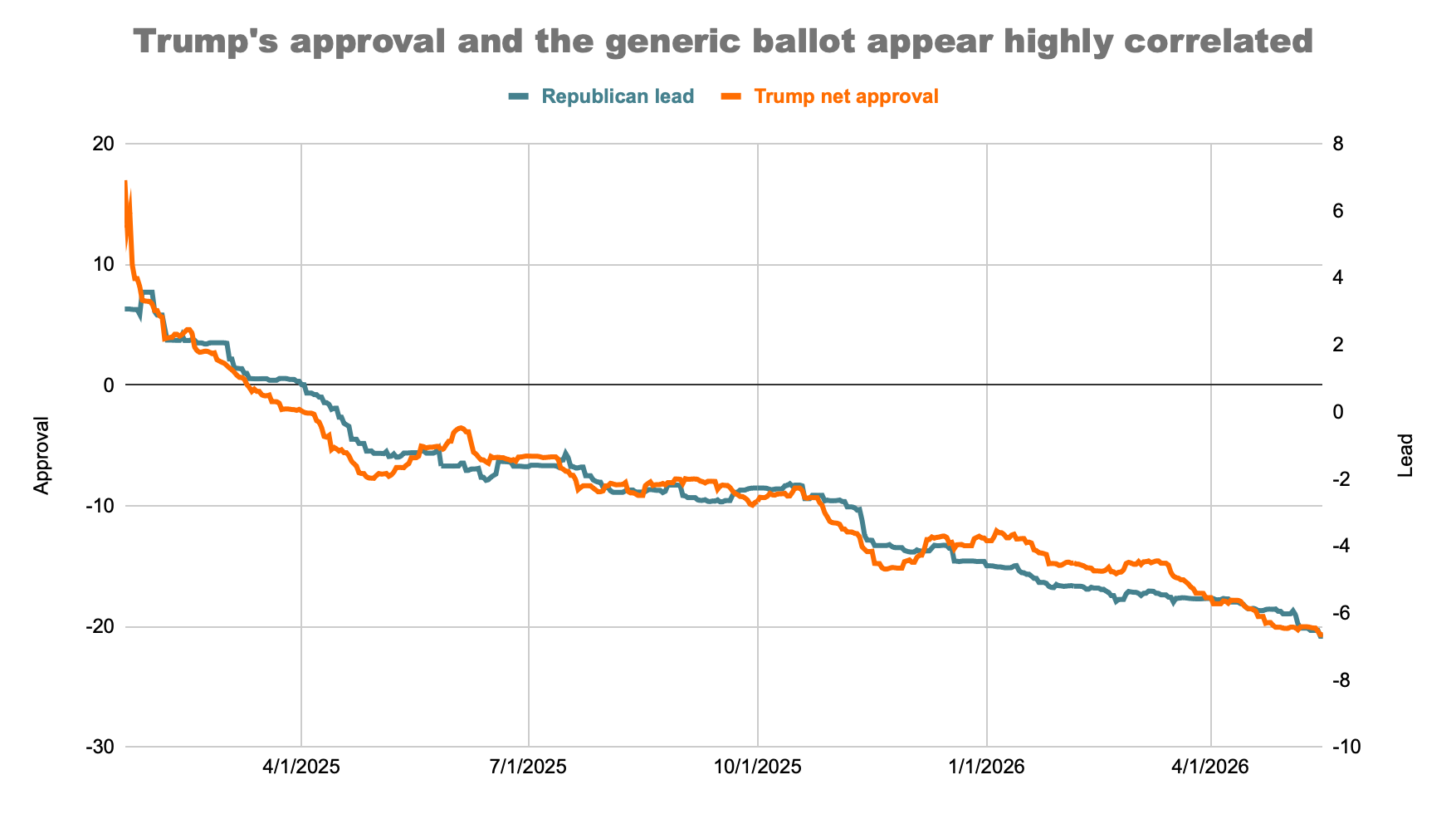
For context, 7% represents a larger advantage than the 5% lead enjoyed by the GOP in the 2010 and 2014 midterms, and slightly short of Democrats’ lead in 2006 and 2018 (a little over 7% ).2 Under those kinds of conditions, Republicans will almost certainly struggle to maintain their majorities in Congress. Of course, there are almost six months to go before voters cast their ballots. The president and his party still have time to turn things around—or collapse to new lows.
All of these numbers are generated using the same polling average system. You can check out the averages for past presidents here.
This is based on the national vote for Congress, adjusted for uncontested seats. We use a similar method to Split Ticket, using data from districts with elections to fill in those without.