

15 Numbers that Shaped US Politics in 2025
Looking back on another tumultuous year


Happy holidays! In more ways than one, 2025 was a paradigm shift in US politics. To round out the year, we tried to capture its biggest twists and turns with 15 numbers, each representing a key event or trend. This is by no means a comprehensive list, so feel free to comment if we missed anything significant!
1. 142
The number of executive orders signed by President Trump in his first 100 days.
When Franklin D. Roosevelt took office in 1933, the Great Depression was at its peak. Unemployment had topped 25%, and millions were homeless. Roosevelt made history that year, signing 99 executive orders in his first 100 days.
That record remained unbroken until 2025, when Donald Trump signed 142 orders in his first 100 days, followed by 83 more across 2025. From cutting immigration and federal agencies to trying to overturn birthright citizenship, Trump’s orders have expanded executive power to levels not seen in decades.
2. 5
The number of states that voluntarily initiated redraws of their congressional maps this year.
Redistricting usually takes place after each decennial census. According to the Pew Research Center, only 39 mid-decade redistricting events took place from 1970 to 2024, only two of which were voluntary. This year saw five, starting when Texas implemented a new map to net the GOP extra House seats.
This is only the beginning. 2026 could see the Supreme Court overturn section 2 of the Voting Rights Act, allowing state legislatures to eliminate majority-minority districts. It’s not yet clear if either party will win the redistricting battle, but it’s voters who have the most to lose as competitive districts disappear.
3. 14%
How much the average Democrat outperformed Kamala Harris’s 2024 margins in special elections this year.
Democrats improving on their 2024 margins isn’t a surprise—the party out of power tends to claw back support as the public sours on the president. The margins are what set this year apart: 2025 may have seen the bluest special elections out of any year going back to at least 1989.
This figure partially reflects how coalitions have shifted in US politics: Democrats are gaining with educated Americans, who are more likely to show up in special elections. However, such a large shift likely provides real warning signs for the GOP, which we analyzed here.
4. 51
The UMich Consumer Sentiment index value for November 2025.
The economy has consistently polled as voters’ top issue since 2022, and Trump’s economic promises drove his reelection last year. According to University of Michigan surveys, however, sentiments have only worsened since he took office.
While UMich’s index is likely depressed by a few points due to a recent shift to online surveys (which doesn’t affect trends during 2025), the November value of 51 is historically poor, eclipsed only by the peak of inflation during Joe Biden’s presidency. Many factors are likely contributing to the dip, from the government shutdown and lingering high prices to Trump’s historic tariff hike.
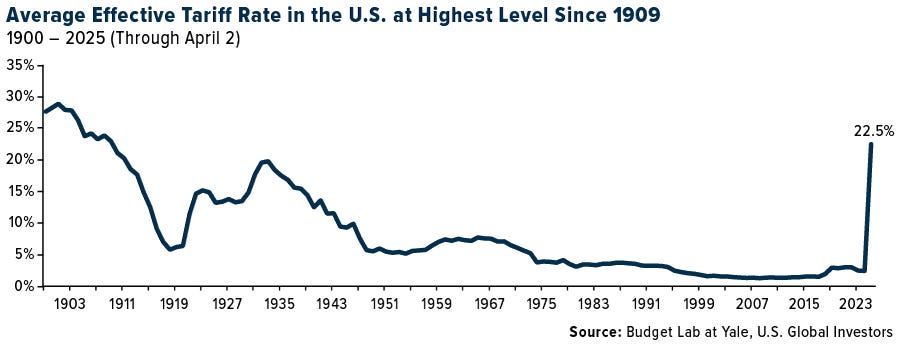
5. 16.8%
The US effective tariff rate.
Tariffs have long been a core component of Trump’s economic policy (remember how he started a trade war with China back in 2018?), but not to this scale. 16.8% is the highest effective tariff rate since the Great Depression. While worst-case predictions about tariff-induced chaos didn’t materialize, many economists are still waiting for the other shoe to drop. The jobs market has slowed, and concerns remain about the tariffs biting in full force in 2026.
6. 43
The number of days the federal government was shut down this year.
On October 1, the federal government closed after Congress failed to reach a deal on appropriations. So began the longest shutdown in US history. For over a month, Democrats and Republicans engaged in failed budget negotiations that centered on the extension of ACA subsidies.
The consequences of the shutdown were numerous. The Supplemental Nutrition Assistance Program (SNAP), which provides food assistance to over 20 million households, was disrupted amidst lawsuits and rulings. Thousands of flights were cancelled, and 670,000 federal workers were furloughed.
7. 2 million
The approximate drop in the US immigrant population from January to November.
A core promise of Trump’s 2024 campaign was restricting immigration amidst an ongoing border crisis. The president has aggressively pursued that goal, including ramping up immigration raids and reversing Biden-era policies. These changes appear to be manifesting in a big way: 2025 saw the largest fall in America’s foreign-born population in decades.
8. 61
The number of laws enacted by the 119th Congress this year.
Even though Republicans won a trifecta in 2024, they struggled to beat the pace of lawmaking during the 118th Congress, which was already the least productive in recent memory. Fewer bills didn’t mean no drama, however: the Epstein Files Transparency Act saw Republicans threaten a mass break from the president, forcing his support on the bill.
9. 2,194,204
The number of votes reported in New York City’s mayoral election.
In one of the most closely-watched races of 2025, Democratic socialist Zohran Mamdani was swept into office on historic turnout (just over 1 million votes were cast in the previous race). The turnout surge was most pronounced among young voters, who largely backed Mamdani. The election also foiled the comeback of Mamdani’s top opponent, former New York Governor Andrew Cuomo.
10. 4,899,210
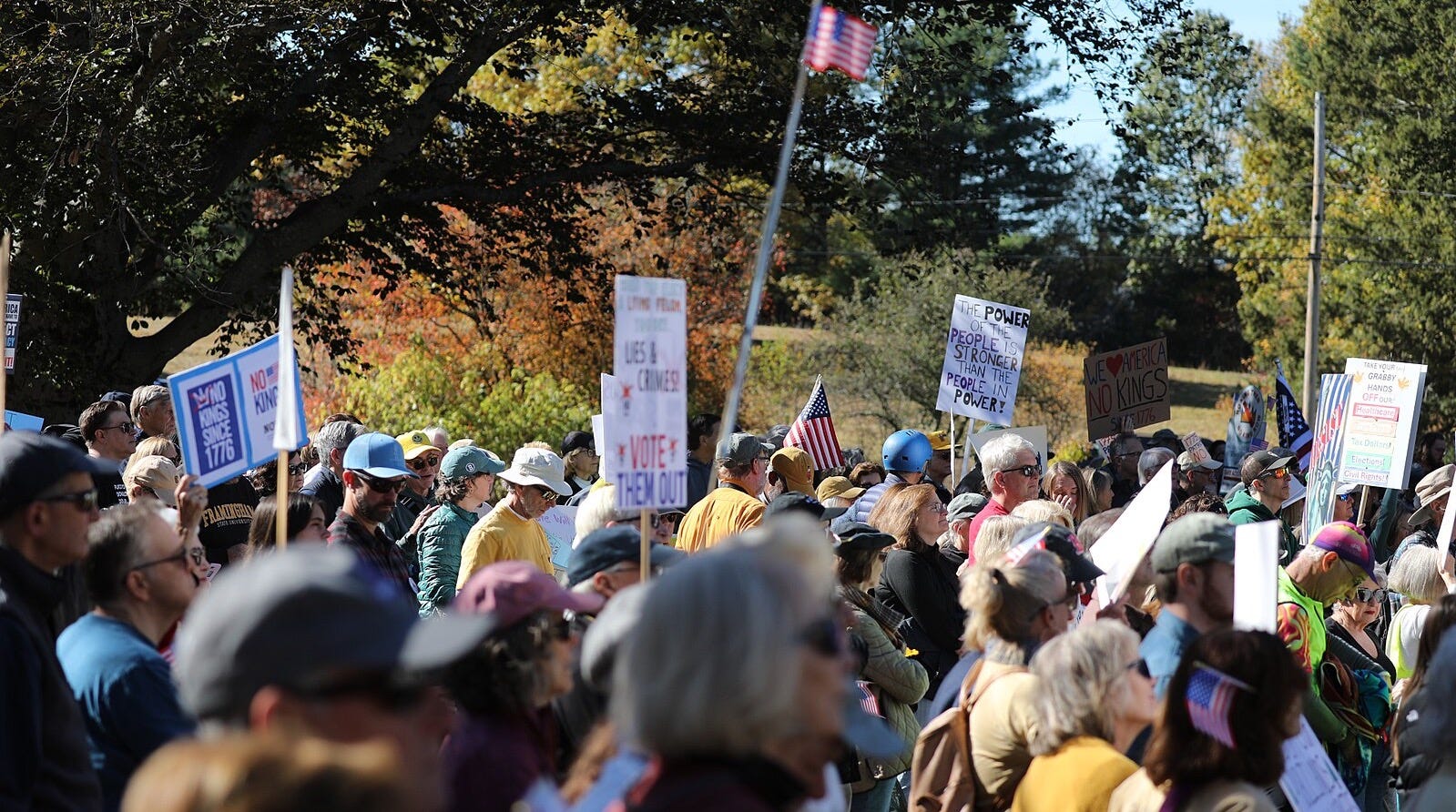
The estimated number of people who participated in the No Kings protests on October 18.
In June, millions of Americans took to the streets as part of the No Kings protests against Donald Trump. Following that success, the campaign’s organizers, which included Indivisible, the ACLU, and 50501, staged another protest in October. Turnout proved even higher the second time around, resulting in what may have been the largest single-day protest in US history.

11. $1.8 Trillion
The US budget deficit for Fiscal Year 2025.
With Elon Musk at its helm, the Department of Government Efficiency (DOGE) was supposed to cut trillions in waste and fraudulent spending to address the national debt crisis. While the agency did slash programs worth billions of dollars (cuts to global health programs have been particularly controversial), the deficit reflects a harsh reality: cuts on this scale can’t reverse the course of US spending.
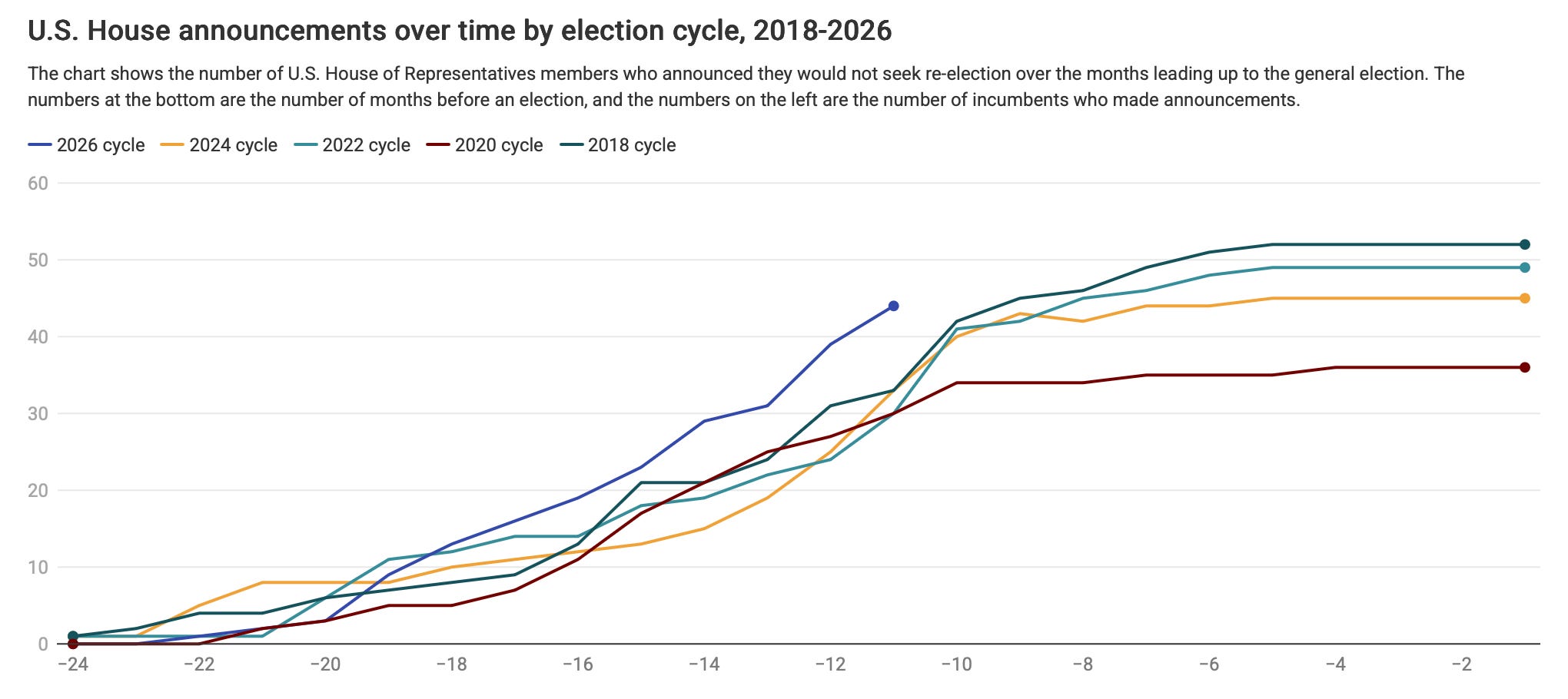
12. 53
The number of incumbents not seeking reelection in Congress.
Incumbents are retiring at a record pace in 2025, including Nancy Pelosi and Mitch McConnell. Some of the resignations could have major implications for next year’s midterms, involving incumbents in crucial swing seats (Jared Golden of ME-02, Don Bacon of NE-02, Thom Tillis of North Carolina).
13. $1 trillion
The value of healthcare cuts enacted by the 2025 Budget Reconciliation Bill (AKA the Big Beautiful Bill/OBBBA).
The signing of the “Big Beautiful Bill” enacted massive cuts to healthcare programs such as Medicaid, Medicare, and the Affordable Care Act. Rural healthcare has been particularly affected. In the wake of the bill’s passage, healthcare has increased in salience: Democrats capitalized on it during this year’s government shutdown, while President Trump’s ratings on the issue have fallen.
14. 30
The known number of US strikes on Venezuelan boats.
Domestic issues have dominated coverage of Trump’s second term, but the foreign policy front hasn’t been without its drama. The president claimed credit for ending eight wars this year, while also moving towards conflict with Venezuela, accusing Venezuelans of carrying drugs into the US and stealing oil and assets. Most US actions have involved attacks on small boats suspected of carrying drugs, but the first land strike took place on December 29.

15. 118
The number of AI-related bills signed into law this year.
Governments across the world have struggled to respond to the rapid rise of artificial intelligence in recent years. While tech leaders tout its potential to transform society for the better, Americans remain more concerned than excited about the technology. In 2025, state legislatures moved fastest to regulate AI deepfakes, which were the focus of 68 of the 118 bills.