

Trump 2.0 Ends First Year Deeply Unpopular
Most polls show Trump's net approval rating underwater by double digits. Only his first term and Nixon's second went lower faster.

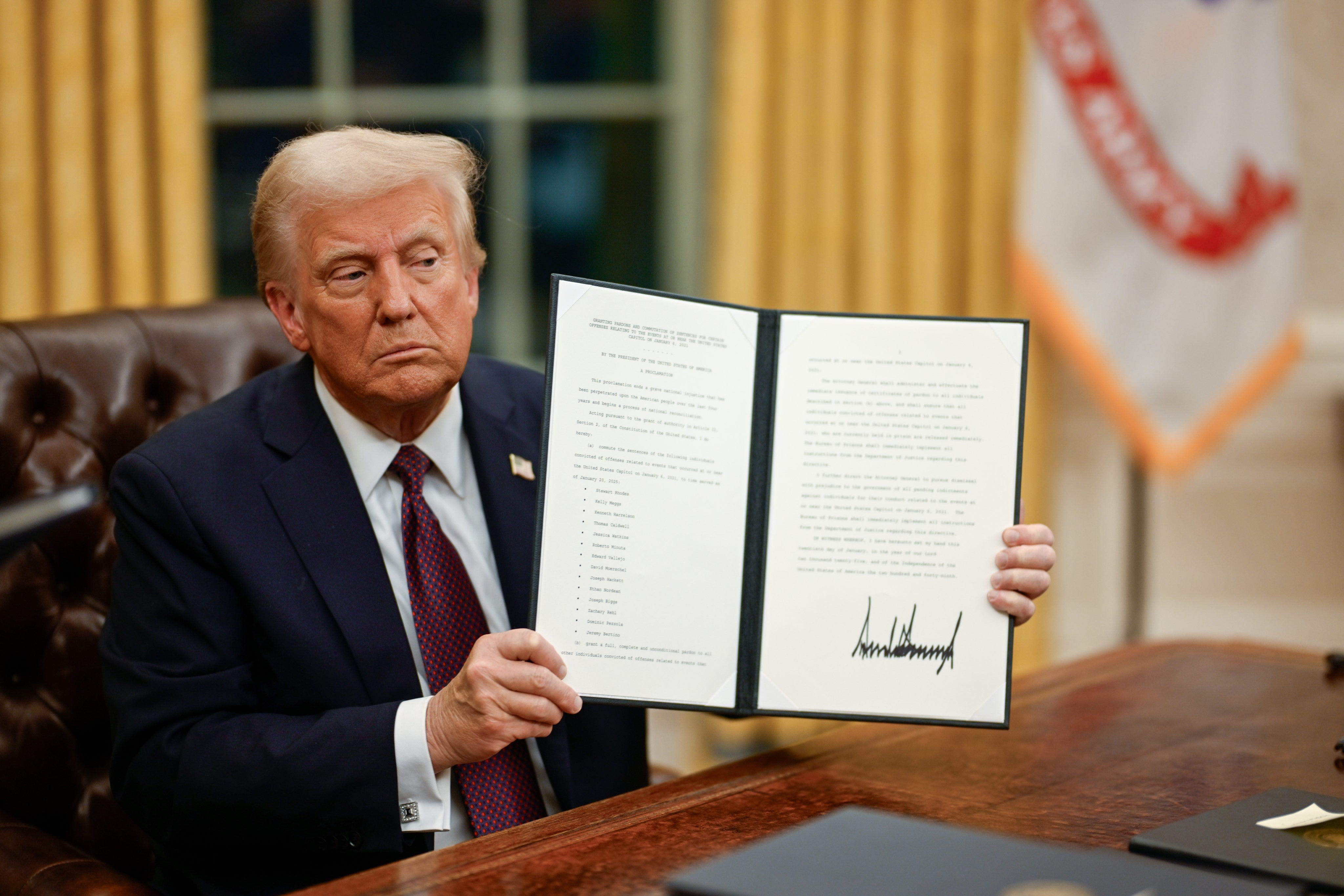
Donald Trump’s second first year in the White House is done. The last 365 days have been a political whirlwind—kicked off by DOGE and tariffs, bisected by the Epstein files, and ending with a military raid on Venezuela. The president achieved several objectives in the last year, from cutting border crossings to muscling the $3 trillion “Big Beautiful Bill” through Congress. Even so, his popularity has taken a significant beating.
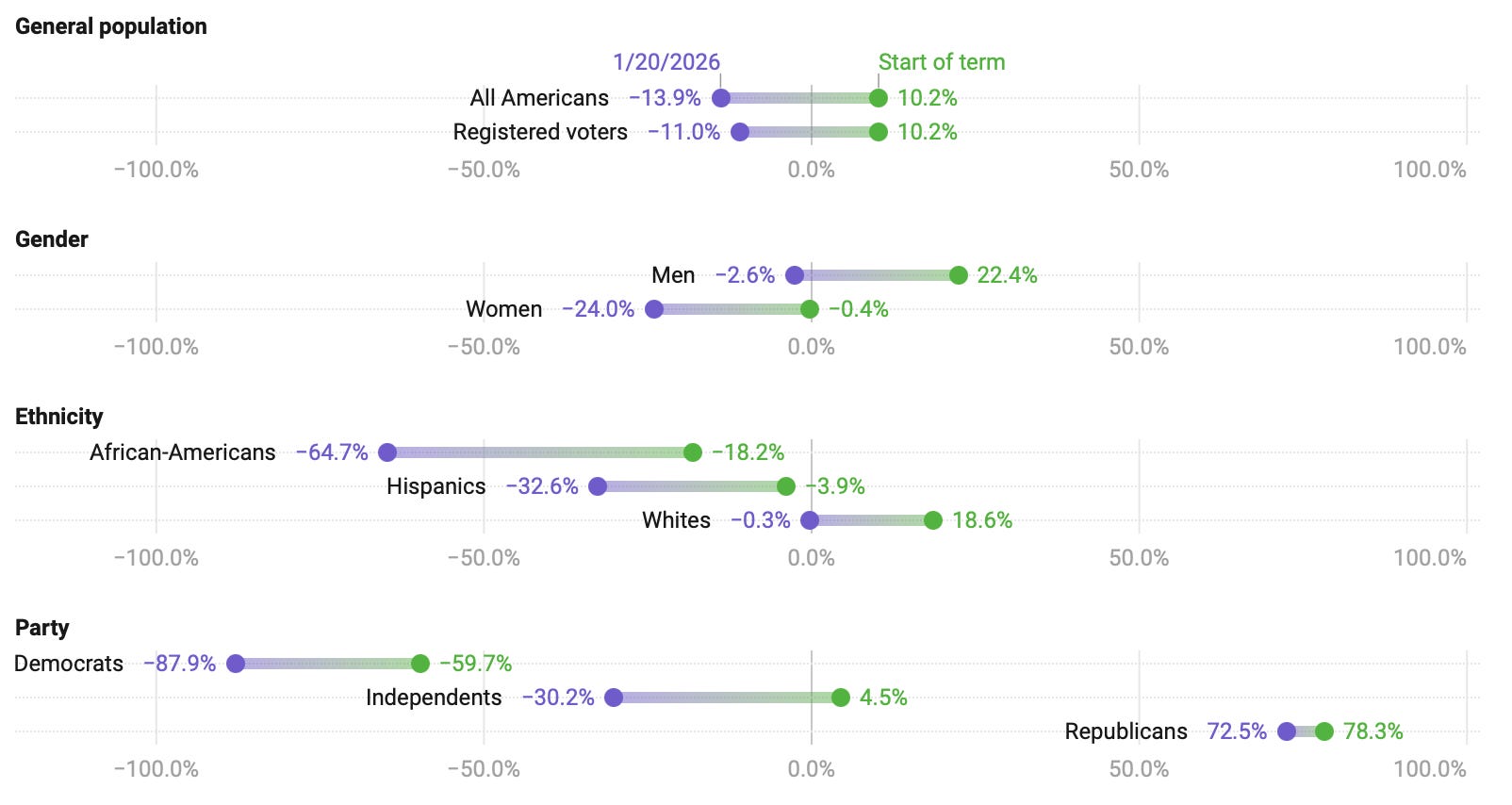
According to our polling average, Trump’s approval rating among all adults is about 14 points lower than his disapproval, meaning his net approval has tumbled over 20 points since Inauguration Day. He has yet to post a positive net rating in any poll this year, and has hit 40% approve or lower in a quarter of polls.
Other averages from RealClearPolitics, DDHQ, the New York Times, and Nate Silver paint a similar picture. That gives Trump 2.0 one of the lowest net approval ratings out of any president—only Nixon’s second term and Trump’s first went lower in 365 days.
See our full collection of historic presidential approval averages here.
Trump’s decline has been especially pronounced among Hispanic and African Americans. He made significant gains with both groups in 2024, winning Hispanic men outright. Those gains are proving difficult to maintain, however, now that Trump faces many of the same issues Biden did.
Chief among those issues is the economy, which remains Americans’ top concern. There are a lot of ways to evaluate how well the US economy is doing, with some indicators painting a better picture than others. In the end, what matters most is how everyday Americans feel. Since Trump took office, consumer sentiments have approached the historic lows seen at Biden’s nadir. Americans have been especially dissatisfied with Trump’s handling of inflation, where his issue-specific net approval has recently hovered between -20 to -30%.
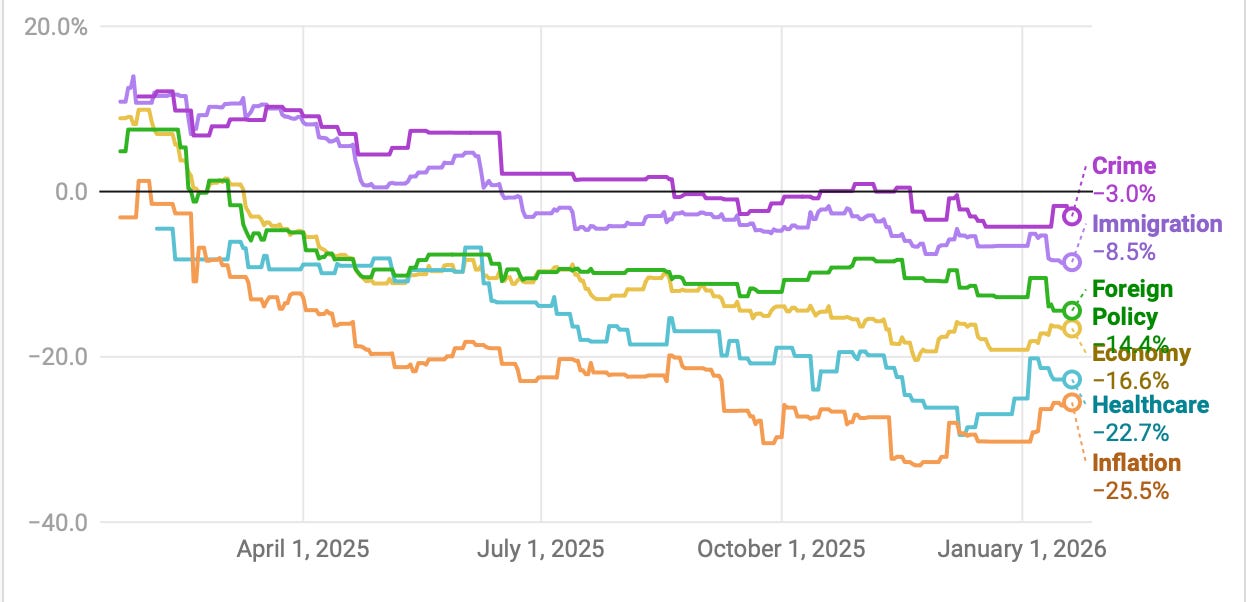
The president’s numbers have been rebounding on the economy and inflation in the last month, which could fuel a recovery if sustained. His overall approval has yet to budge, however. This could be because he’s hitting new lows on two of his more popular issues, foreign policy and immigration. These drops coincided with his threats against Greenland and an ICE shooting in Minnesota.
It’s not just Trump
While a lot has happened in the last year, Trump’s decline is not all unique to him. Presidents tend to lose support in their first year as their “honeymoon periods” fade. Rising polarization has also affected approval—modern presidents have increasingly contended with low out-party and high in-party support. This sets a lower ceiling for each president’s popularity, but also a higher floor that protects them from total collapse.
What’s next?
Approval ratings may not reflect on presidents as much as they used to, but they matter from an electoral standpoint. Since World War II, unpopular presidents have generally seen bigger midterm swings toward the opposing party.
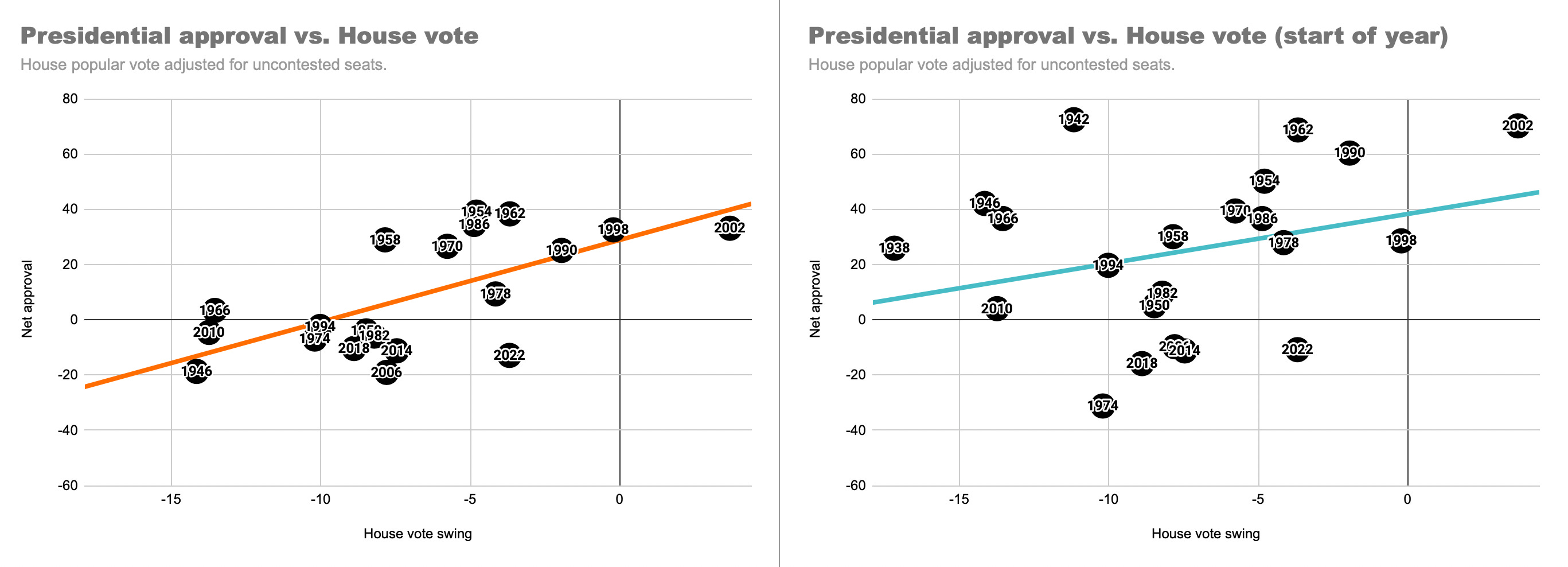
National polling has been roughly consistent with a significant shift against the GOP. Even though the Democratic Party is highly unpopular, voters prefer Democrats to Republicans for Congress by about 5%. The question is whether Trump’s approval ratings will shift dramatically between now and November, minimizing losses. For that, we can look to recent presidents of the polarized era.
Trump starts his second year in a similar spot to Joe Biden, and second-term Barack Obama and George W. Bush. This isn’t great news, since none of Trump’s predecessors recovered by the midterms, and their parties all suffered midterm losses. Joe Biden oversaw the smallest losses of the three, and that had more to do with the overturning of Roe v. Wade.
The next presidential election, where approval ratings can be pretty darn predictive, is still far off, leaving more room for Trump’s approval to change. If his polling sees further declines like Bush and Biden’s did, an electoral disaster is likely. On the upside, Obama shows what a rebound looks like. He gave Democrats a friendly national environment in 2016 (Hillary Clinton did lose that year, but she was historically unpopular and still won the popular vote).